Built for psychology students
Fabric for psychology students
Research papers, experiment designs, statistics, case studies. Fabric's AI tutor helps you understand methodology by referencing your actual assigned readings.
Research papers, experiment designs, statistics, case studies, lecture slides, lab reports, ethical guidelines. Psychology students read enormous volumes of academic literature while also grappling with methodology and statistics, and the challenge is connecting the theory to the methods to the findings across dozens of papers and studies. The study you need to cite is in one of forty PDFs, and you can picture the graph but can't remember which paper it was in. The statistical method the lecturer explained is in a slide deck from three weeks ago, and the example that would clarify it is in a different paper entirely.
Upload your readings and course materials to Fabric. The AI assistant helps you understand methodology by referencing your actual assigned readings. "What was the sample size and methodology in the Smith and Jones study?" "Find every paper in my library that used longitudinal design." "Explain the difference between the two theories of attachment using my week 4 and week 7 readings." Answers grounded in your syllabus.
An AI tutor for theory, methods, and findings
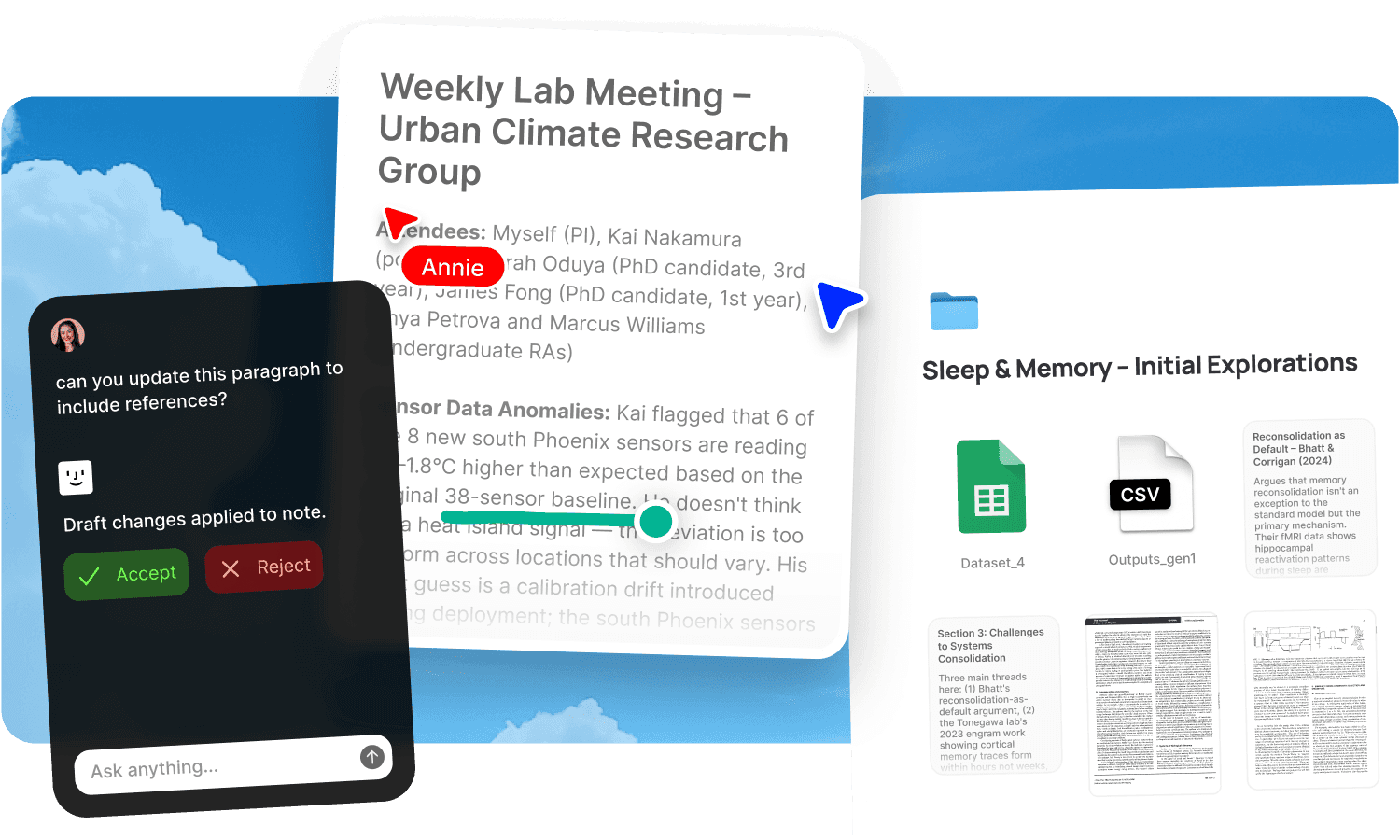
The AI assistant works from your papers, textbook chapters, lecture slides, and notes. Ask it to explain a statistical concept using the data from your assigned readings. Ask it to compare theoretical perspectives across papers on your reading list. Ask it to help you design an experiment by referencing the methodology in studies you've read. Ask it to quiz you on the key theories from a specific module.
The assistant has memory across sessions. It remembers what you've covered, which theories you've studied, and where you've had difficulty. It adapts to your learning rather than starting fresh every conversation.
Search across dozens of papers by meaning
AI search reads inside every PDF, slide deck, and note and searches by meaning, not keyword. "Studies using fMRI in my cognitive psych readings" finds the relevant papers even if fMRI isn't in their titles. "Every paper that discusses the bystander effect" pulls results across your full library, from social psychology readings to methodology examples.
The search connects across modules. A developmental psychology finding is findable when it's relevant to your abnormal psychology essay. Material doesn't stay siloed in the week or module where it was assigned.
Record lectures and seminars
AI voice notes record and transcribe lectures and seminars without a meeting bot. The lecturer's explanation of a statistical test, the seminar discussion about a controversial study, the guest speaker's research presentation, all transcribed and searchable. Your typed notes and the transcript merge into one document.
Search for "when the lecturer explained ANOVA" and jump to the timestamp. No re-watching an hour of recording. For the full workflow, see lecture notes.
Annotate papers and build your evidence base
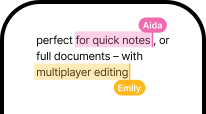
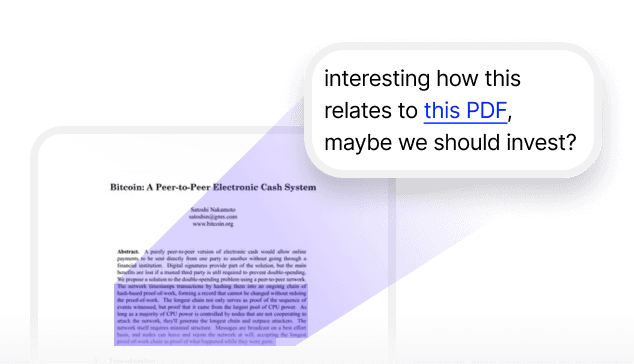
Annotations let you highlight and comment directly on research papers, textbook chapters, and lecture slides. Mark the key findings. Flag a methodological concern. Note the connection between one study's results and another's theoretical framework. Your annotations are searchable across every reading, so "my note about the control group in the anxiety study" is findable without remembering which paper it was in.
Read in the reader for a clean, distraction-free experience. Your highlights and notes stay attached and are searchable alongside everything else. For managing your full paper library, see research papers.
Write essays and lab reports alongside your research
Draft essays and lab reports in notes and docs with your entire reading library searchable alongside. When you need to cite a specific finding, verify a sample size, or check which study used which methodology, search without leaving the draft. The AI can surface relevant papers and passages as you write.
Use the canvas to map an argument visually: arrange studies, theoretical perspectives, and your own analysis spatially to see the structure of an essay before committing to prose. Useful for literature review sections and theoretical comparisons.
Get started
Upload your readings and get a tutor that understands your methodology and your theory. Try Fabric free.
See also: Fabric for students for the full student workspace. Studying and exam prep. Literature review. Research papers. Dissertation and thesis.
Comparing tools? See the best AI study app and the best AI note-taking app for students.
FAQs
Can the AI explain methodology from my assigned readings?
Yes. The AI assistant references the specific methodology, sample sizes, and findings from papers in your library.
Can I search across all my research papers by meaning?
Yes. AI search finds papers by theory, methodology, or finding, not just author or title. "Every study using a between-subjects design" finds them across your full library.
Can the AI compare theoretical perspectives?
Yes. Ask it to compare how different readings address the same concept, tracing the argument across multiple papers on your reading list. It cites the specific passages.
Can the AI help me design experiments?
Yes. Ask it to reference the methodology from studies you've read when helping you plan your own research design.
Can I record and transcribe lectures?
Yes. AI voice notes record and transcribe lectures and seminars with timestamps. Search the transcript by concept.
Can I annotate papers and have annotations be searchable?
Yes. Annotations let you highlight and comment on any PDF or document. Your annotations are searchable across your entire library.
Does it remember what I've studied?
Yes. The assistant has memory across sessions. It adapts to your learning and can focus on areas where you've had difficulty.
Is my data private?
Yes. Fabric uses AES-256 encryption and is CASA Tier 2 compliant. Your data is never used to train AI models.