Built for engineering students
Fabric for engineering students
Technical drawings, formulas, lab reports, specifications, textbooks. Fabric handles every file type and makes it all searchable. AI tutor that references your specific lab data when explaining the theory.
Technical drawings, formulas, lab reports, specifications, textbooks, lecture slides, project documentation, simulation outputs. Engineering students work across more file types than almost anyone, and the material bridges theory and practical in a way that makes it hard to keep connected. The formula from the lecture, the lab data it explains, and the specification it applies to are in three different places. When you're writing a report and need to connect results to theory, the reconnection happens in your head because the tools don't link them.
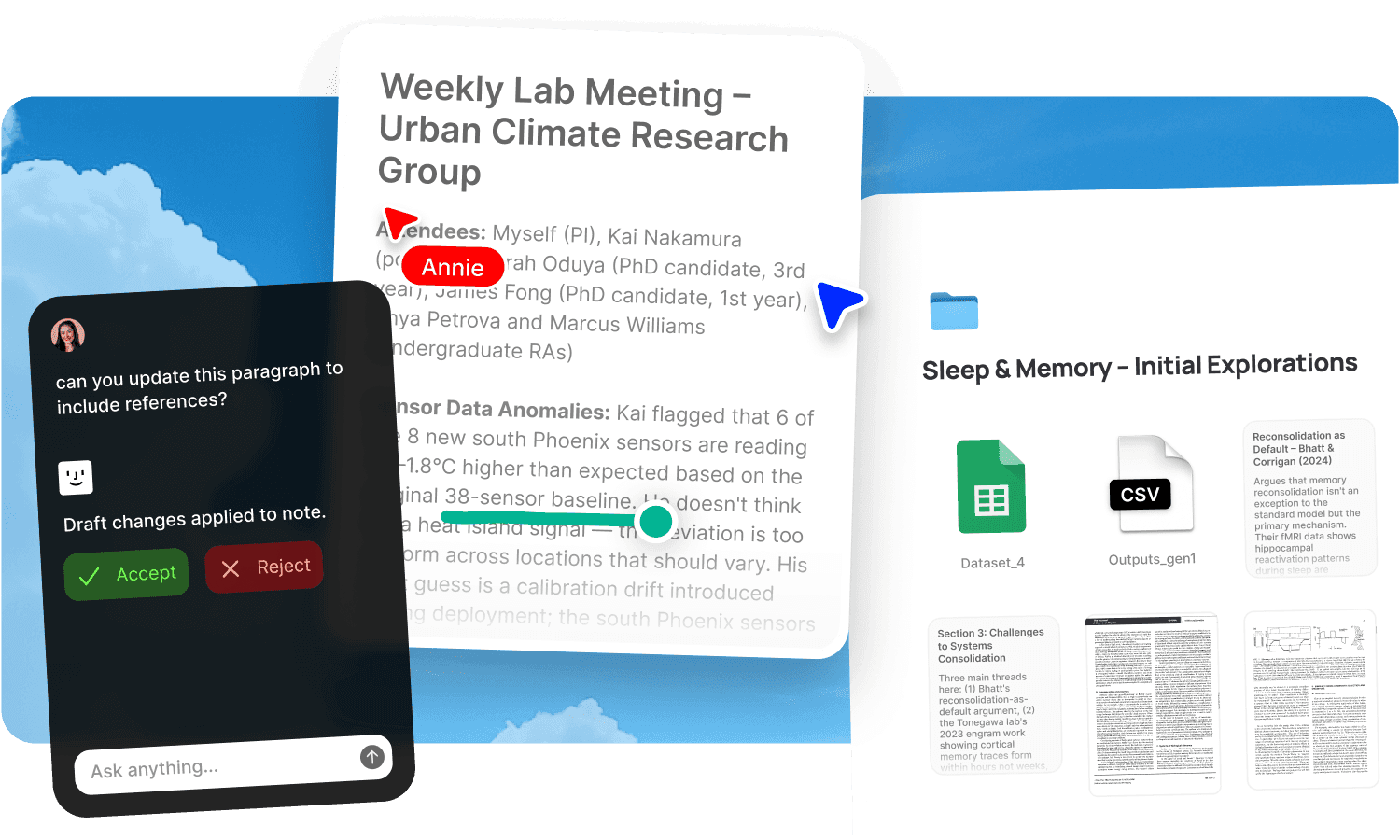
Upload your course materials to Fabric. The AI assistant handles every file type and can reference your specific lab data when helping you understand the theory. "Explain why my beam deflection results differ from the theoretical prediction." "Find the formula for heat transfer coefficient from the thermodynamics module." Answers from your course, grounded in your data.
An AI tutor for theory and practice together
The AI assistant works from your lecture slides, textbooks, lab reports, and technical specifications. Ask it to explain a formula using the context from your lectures. Ask it to help you interpret lab results by referencing the theoretical model you studied. Ask it to find the relevant specification for your design project.
The theory and the practice are searchable in the same system, so the connection between what you learned and what you measured is always one query away.
Search across every file type
AI search reads inside PDFs, slide decks, spreadsheets, images of technical drawings, and your notes. Ask "the formula for Reynolds number from the fluid mechanics module" or "my lab results for the tensile testing experiment" and find the material by concept. The search works across every module and year.
Record lectures and lab briefings
AI voice notes record and transcribe lectures and lab briefings. The demonstrator's safety instructions, the lecturer's derivation walkthrough, the project supervisor's feedback, all captured and searchable. See lecture notes.
Annotate and write reports
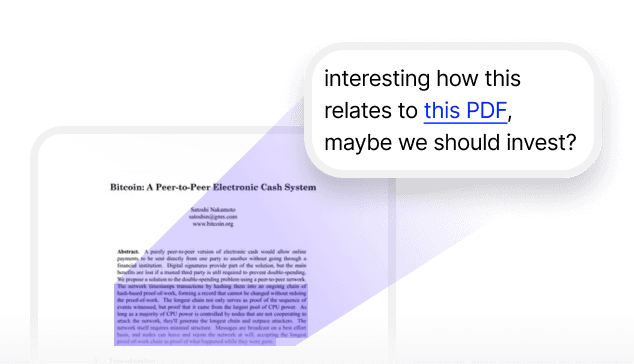
Annotations let you highlight and comment on textbook chapters, specifications, and lab sheets. Draft lab reports and project documentation in notes and docs with your data and theory searchable alongside. The canvas helps you map project structures and design concepts visually.
Get started
Upload your course materials and get a tutor that connects your theory to your lab data. Try Fabric free.
See also: Fabric for students. Studying and exam prep. Lecture notes.
Comparing tools? See the best AI study app.
FAQs
Can the AI reference my lab data when explaining theory?
Yes. The AI assistant works from your lab reports and lecture materials together. It can help you connect experimental results to theoretical models.
Can I search across drawings, spreadsheets, and PDFs?
Yes. AI search reads inside every file type, including images of technical drawings and spreadsheet data.
Can I record lab briefings?
Yes. AI voice notes record and transcribe any session with timestamps.
Is my data private?
Yes. Fabric uses AES-256 encryption and is CASA Tier 2 compliant. Your data is never used to train AI models.