Built for economics students
Fabric for economics students
Models, datasets, policy papers, case studies. AI tutor that references specific data from your assigned readings when explaining concepts.
Models, datasets, policy papers, case studies, lecture slides, problem sets, journal articles, econometric outputs. Economics students work across theoretical models, empirical data, and policy analysis, and the challenge is connecting all three. The model from the microeconomics lecture explains the data in the policy paper you're analysing for your essay, but the model is in one set of slides, the data is in another document, and the essay is in a third tool. The problem set from last week used a technique you need for this week's econometrics, but finding it means scrolling through weeks of downloaded materials.
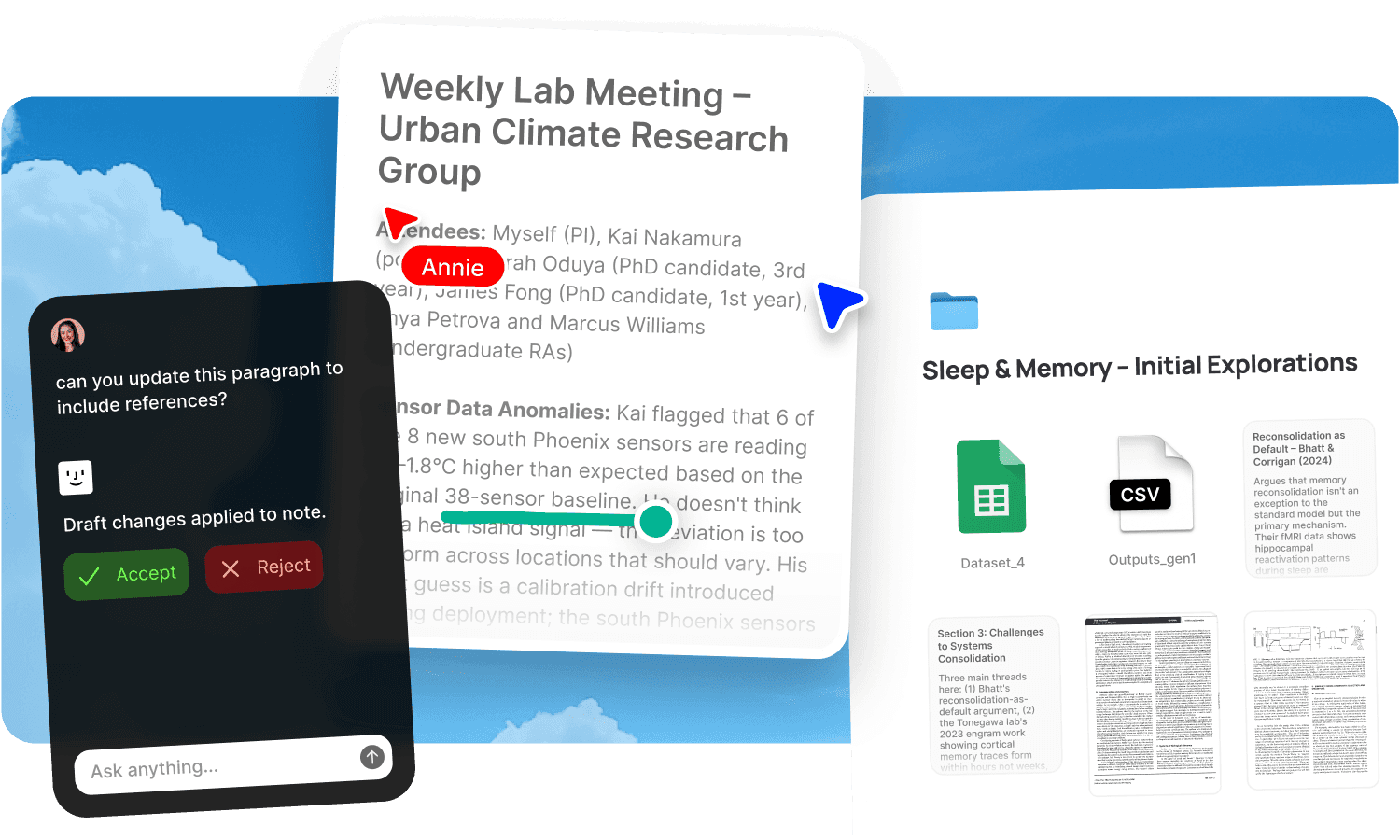
Upload your materials to Fabric. The AI assistant references specific data from your assigned readings when explaining concepts. "Explain elasticity using the examples from this week's lecture." "Find every paper in my library that discusses monetary policy transmission." "Compare the approaches to market failure in my micro and public economics readings." Answers grounded in your course.
An AI tutor that connects theory, data, and policy
The AI assistant works from your lecture slides, problem sets, policy papers, datasets, journal articles, and notes. Ask it to explain a model using the data from your readings. Ask it to compare how different economists in your syllabus approach the same problem. Ask it to walk through an econometric technique using your problem set examples. Ask it to find the relevant empirical evidence for your essay argument.
The assistant has memory across sessions. It remembers which models you've studied, which datasets you've worked with, and builds on your understanding.
Search across every module by meaning
AI search finds material by economic concept across your full library. "Papers discussing the Phillips curve" or "every model we covered involving externalities" pulls the relevant content from microeconomics, macroeconomics, and applied modules together. The search connects across years, so a technique from first-year quantitative methods is findable when it's needed in a final-year dissertation.
Record lectures and seminars
AI voice notes record and transcribe lectures, seminars, and guest speaker sessions. The lecturer's walkthrough of a model, the seminar debate about a policy, the practitioner's perspective on a market, all captured and searchable. See lecture notes.
Annotate readings and data
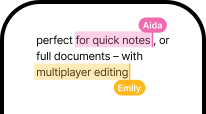
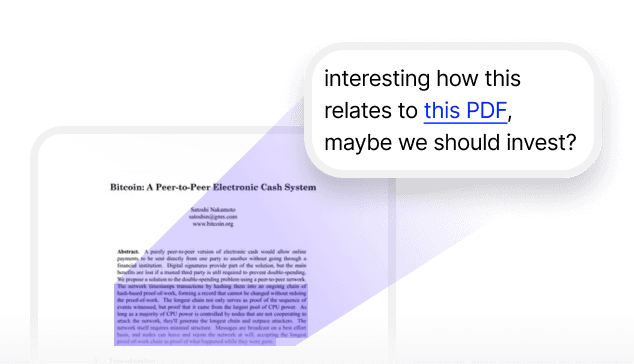
Annotations let you highlight data points, flag arguments, mark key assumptions, and note connections across readings and datasets. Your annotations are searchable across your full library.
Write essays and dissertations alongside your data
Draft essays, problem set write-ups, and dissertations in notes and docs with your models, data, and readings searchable alongside. The canvas helps you map economic arguments and compare models visually. See research papers and dissertation and thesis.
Get started
Upload your readings and get a tutor that connects your theory to your data. Try Fabric free.
See also: Fabric for students. Studying and exam prep. Literature review.
Comparing tools? See the best AI study app.
FAQs
Can the AI reference data from my assigned readings?
Yes. The AI assistant works from your uploaded materials and can reference specific data, models, and arguments from your readings.
Can I search for economic theories across all my materials?
Yes. AI search finds material by concept across lecture slides, papers, problem sets, and notes simultaneously.
Can the AI walk through econometric techniques?
Yes. Ask it to explain a technique using the examples and notation from your problem sets.
Can I record lectures?
Yes. AI voice notes record and transcribe any lecture with timestamps.
Can I connect first-year techniques to final-year work?
Yes. Search works across every module and year. Early material is findable when it's relevant to later courses.
Can the AI quiz me on models and theories?
Yes. Ask it to test you on any module's content from your actual materials.
Does it remember what I've covered?
Yes. The assistant has memory across sessions and builds on your understanding.
Is my data private?
Yes. Fabric uses AES-256 encryption and is CASA Tier 2 compliant. Your data is never used to train AI models.