Built for philosophy students
Fabric for philosophy students
Dense primary texts, commentary, lecture notes, essay plans. Fabric makes Kant searchable. AI tutor that explains your assigned readings and traces arguments across philosophers.
Dense primary texts, commentary, lecture notes, essay plans, secondary literature, seminar handouts. Philosophy involves some of the most challenging reading in any discipline, and the texts don't get easier on re-reading unless you know what you're looking for. The argument that Kant makes in the second Critique connects to the epistemological framework from two weeks ago, but finding the relevant passage in a 300-page text means re-reading sections until you locate it. The commentary that clarified the argument is in a different PDF. Your lecture notes about it are in a third place. When you're writing an essay and need to reconstruct the chain of reasoning across three philosophers, the retrieval problem is the bottleneck.
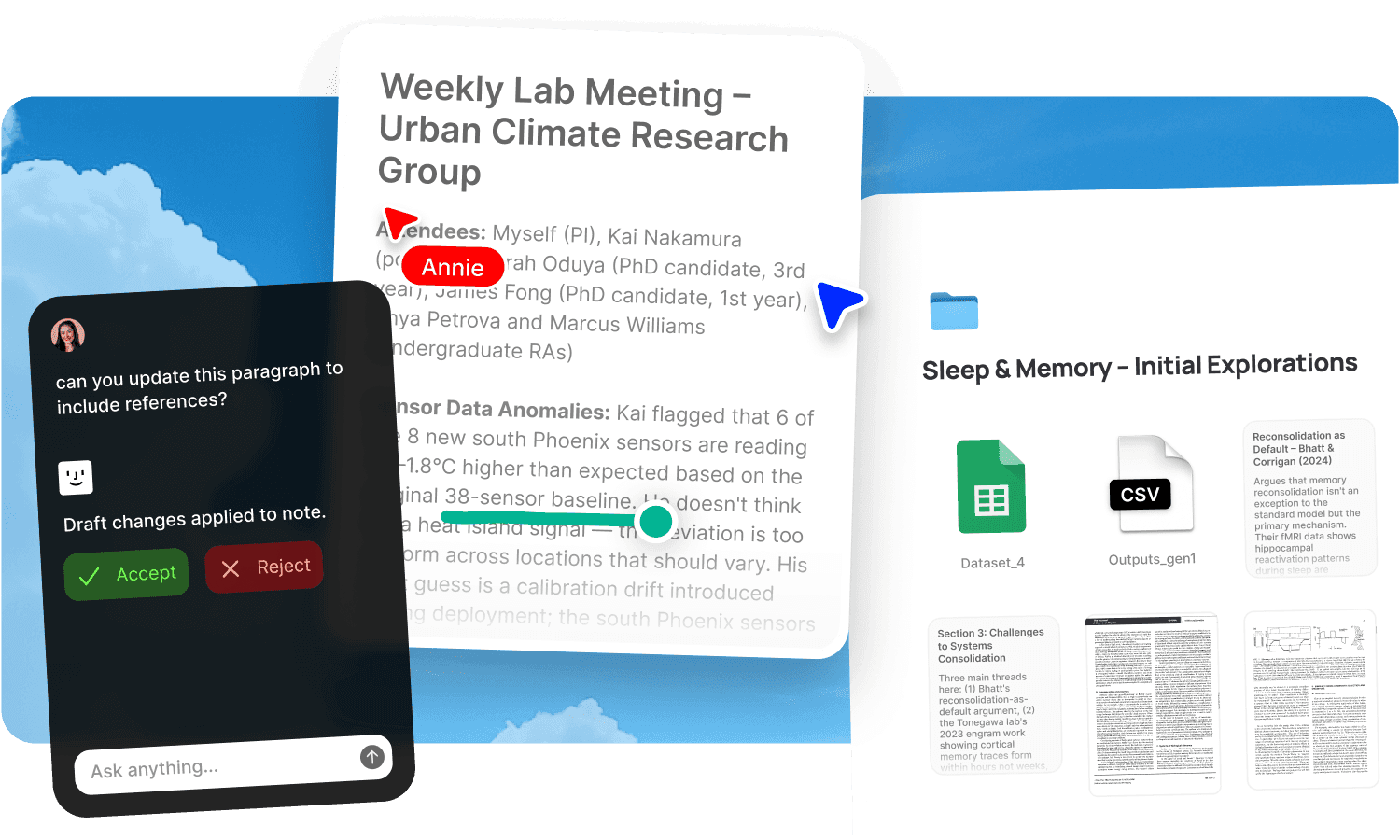
Upload your readings to Fabric. The AI assistant makes Kant searchable. "Explain the categorical imperative using my week 3 reading." "Trace the argument about free will across Hume, Kant, and the lecture from week 8." "Find every passage in my assigned texts that discusses the is-ought problem." "What does the commentary say about Heidegger's use of Dasein?" AI tutor that explains your assigned readings and helps you trace arguments across multiple philosophers in your syllabus.
An AI tutor for arguments across philosophers
The AI assistant works from your primary texts, commentary, lecture notes, secondary literature, and your own essay plans. Ask it to explain a passage using the context from your lectures. Ask it to compare how different philosophers in your syllabus address the same problem. Ask it to trace an argument's development across texts. Ask it to quiz you on the key concepts, distinctions, and arguments from a specific module.
The assistant has memory across sessions. It remembers which texts you've worked through, which arguments you've engaged with, and can build on your philosophical development.
Search by philosophical concept
AI search finds material by philosophical concept across your full library. "The problem of induction in my epistemology readings" or "every text that discusses personal identity" or "where Aristotle addresses virtue" finds the relevant passages by meaning, not keyword. The search handles the dense, technical language of philosophy and finds relevant content even when different philosophers use different terminology for related concepts.
Record lectures and seminars
AI voice notes record and transcribe lectures, seminars, and tutorial discussions. The lecturer's reconstruction of an argument, the seminar debate about a passage, the tutor's clarification of a distinction, all captured and searchable. Your typed notes and the transcript merge into one document. See lecture notes.
Annotate texts and trace connections
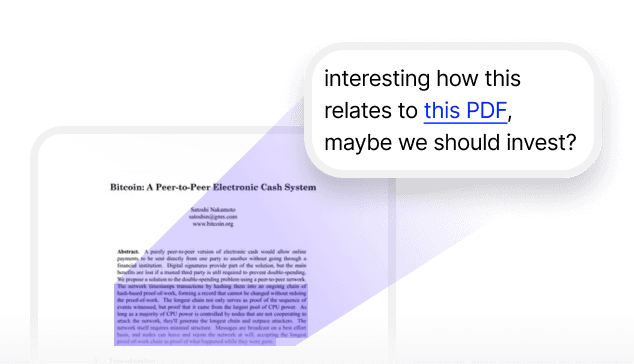
Annotations let you highlight arguments, flag difficult passages, note connections between texts, and mark the key moves in a philosophical argument. Your annotations are searchable across your full library, so a note about a weakness in an argument from last semester is findable when it becomes relevant to a new essay.
Read primary texts in the reader for a focused experience. Your highlights and marginal notes stay attached and searchable.
Write essays alongside your readings
Draft essays and essay plans in notes and docs with your primary texts, commentary, and lecture notes searchable alongside. When you need to verify an argument, find a supporting passage, or check what a philosopher said about a specific concept, search without leaving the draft. The canvas helps you map the structure of an argument or compare philosophical positions visually.
Get started
Upload your readings and get a tutor that can navigate dense philosophy with you. Try Fabric free.
See also: Fabric for students. Studying and exam prep. Literature review. Research papers.
Comparing tools? See the best AI study app.
FAQs
Can the AI explain dense philosophical texts?
Yes. The AI assistant explains passages using context from your lectures and commentary, not generic summaries. It works from what you've been assigned.
Can I trace arguments across multiple philosophers?
Yes. Ask the AI to compare how Hume, Kant, or any philosophers in your syllabus address the same problem. It cites the specific passages from your readings.
Can I search philosophical concepts across all my readings?
Yes. AI search finds material by concept across primary texts, commentary, secondary literature, and lecture notes simultaneously.
Can the AI quiz me on philosophical arguments?
Yes. Ask it to test you on concepts, distinctions, and arguments from any module in your programme.
Can I record seminars?
Yes. AI voice notes record and transcribe any session with timestamps.
Can I annotate primary texts with searchable notes?
Yes. Annotations let you highlight and comment on any text. Your notes are searchable across your full library.
Does it remember my philosophical development?
Yes. The assistant has memory across sessions and builds on your engagement with the arguments.
Is my data private?
Yes. Fabric uses AES-256 encryption and is CASA Tier 2 compliant. Your data is never used to train AI models.