Built for law students
Fabric for law students
Upload your case law, statutes, and readings. Fabric is your personal tutor that knows your assigned materials. "Compare the reasoning in Donoghue v Stevenson with Caparo."
Case briefs scattered across PDFs, textbooks, and notes. Statutes in one folder, lecture slides in another, tutorial prep in a third. You've read the cases, but when you're writing an essay at midnight and need the specific ratio from a judgment you studied five weeks ago, you're opening files one at a time hoping to recognise it. The reading load in law is enormous, and the retrieval problem is worse: finding the right argument from the right case at the right moment.
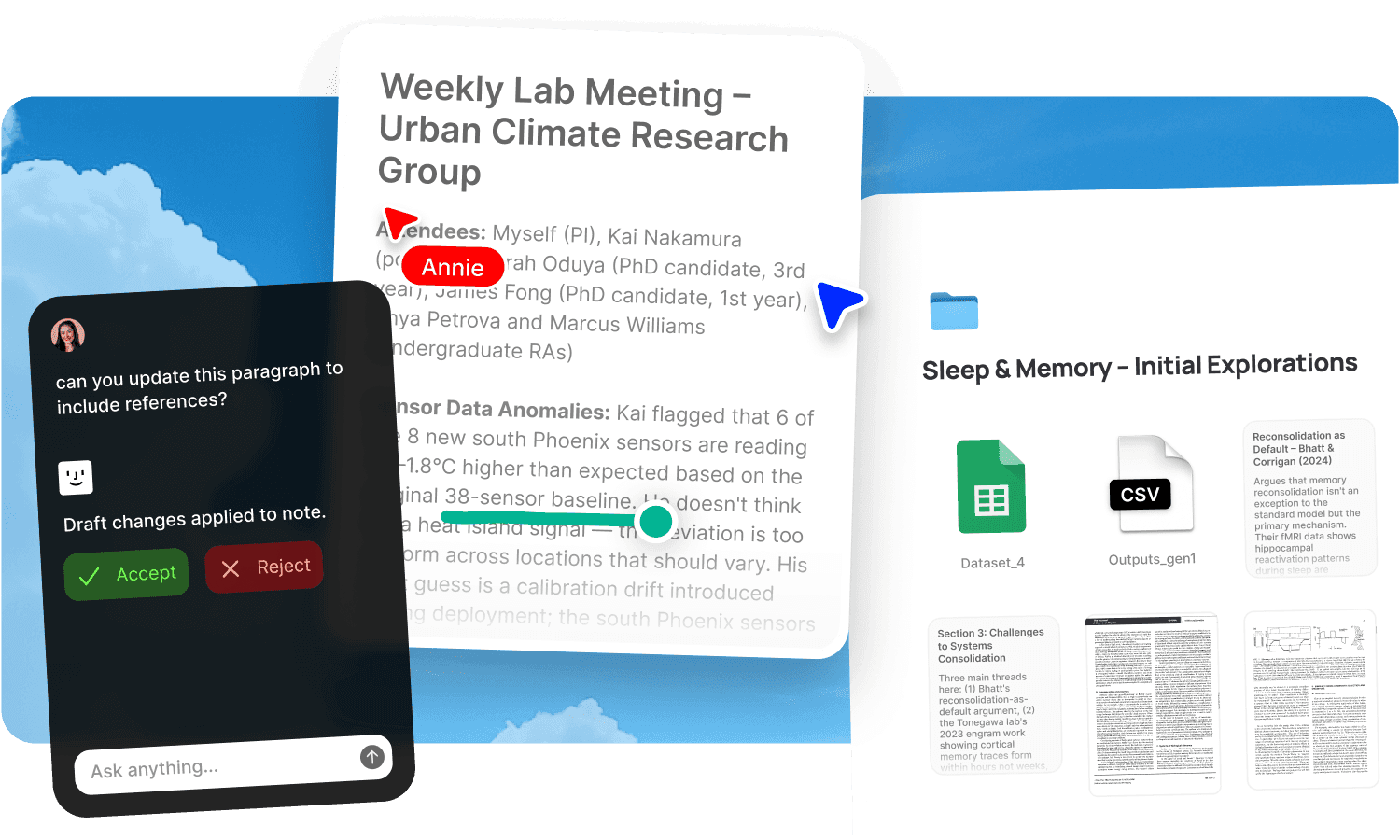
Upload your case law, statutes, and readings to Fabric. The AI assistant reads all your cases, understands the arguments, and lets you interrogate them conversationally. Ask "compare the reasoning in Donoghue v Stevenson with Caparo." Ask "what did Lord Denning say about consideration in the High Trees case." Every answer comes from your actual assigned readings, not Wikipedia.
An AI tutor that knows your cases
The AI assistant works from the materials you've uploaded: case PDFs, statute excerpts, textbook chapters, lecture slides, and your own notes. Ask it to explain a ratio, compare judgments, trace a doctrine across cases, or identify the key authorities on a topic. It answers from your syllabus, not from the internet, and cites the specific page or passage.
Ask it to quiz you before a tutorial. Ask it to help you structure an argument for a problem question using the cases from your reading list. Ask it to find every case you've studied where the court considered remoteness of damage. The tutor knows your course because it's read your course.
The assistant has memory across sessions, so it remembers what you've covered and can build on previous conversations.
Search across every case, statute, and note by legal concept
AI search finds material by legal concept, not keyword. Search "promissory estoppel" and find every case, note, and lecture slide that addresses it, even if some of them use different terminology. Search "cases where the court rejected the neighbour principle" and find the judgments across your full library.
The search reads inside PDFs, scanned cases, lecture slides, and your typed notes simultaneously. A case you studied in week 3 is as findable as one from yesterday.
Record lectures and tutorials
AI voice notes record and transcribe lectures and tutorials without a meeting bot. The lecturer's explanation of consideration, the tutorial discussion about offer and acceptance, the visiting practitioner's war stories about litigation, all transcribed and searchable. Your typed notes and the transcript merge into one document.
When you're revising and need to hear how the lecturer explained a concept, search for it and jump to the timestamp. For the full lecture capture workflow, see lecture notes.
Annotate cases and readings
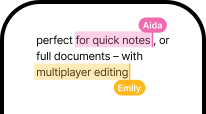
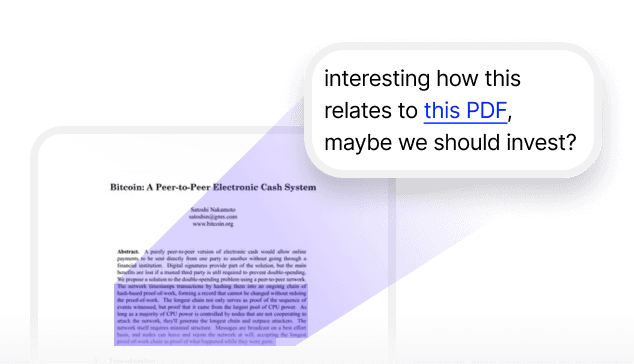
Annotations let you highlight and comment directly on case PDFs, statutes, and textbook chapters. Mark the ratio. Flag the obiter. Note the connection to another case. Your annotations are searchable across every reading in your library, so "my note about the dissent in X case" is findable without remembering which PDF it's in.
Read in the reader for a clean, distraction-free experience. Your highlights and notes stay attached and are searchable alongside everything else.
Write essays alongside your research
Draft essays and problem questions in notes and docs with your entire case library searchable alongside. When you need to verify a ratio, find a supporting authority, or check what a case said about a specific principle, search without leaving the draft. The AI can surface relevant cases and passages as you write.
Use the canvas to map an argument visually: arrange cases, statutes, and academic commentary spatially to see the structure before you commit to prose.
Get started
Upload your cases and give yourself a tutor that knows your reading list. Try Fabric free.
See also: Fabric for students for the full student workspace. Studying and exam prep. Research papers. Literature review. For practising lawyers, see Fabric for lawyers and Fabric for law firms.
Comparing tools? See the best AI study app and the best AI note-taking app for students.
FAQs
Can the AI compare cases from my reading list?
Yes. Ask the AI assistant to compare reasoning, trace a doctrine across judgments, or identify where courts have diverged. It works from your assigned cases and cites the specific passages.
Can I search by legal concept, not keyword?
Yes. AI search finds material by meaning. "Duty of care in negligent misstatement" finds the relevant cases even if they don't use those exact words.
Can I record and transcribe law lectures?
Yes. AI voice notes record and transcribe lectures and tutorials. The transcript is searchable by legal concept.
Can I annotate case PDFs?
Yes. Annotations let you highlight and comment on any PDF. Mark the ratio, flag the obiter, note connections. Your annotations are searchable across your full library.
Can the AI quiz me before a tutorial?
Yes. Ask it to test you on the cases from a specific topic or week. It generates questions from your actual materials.
Does it remember what I've studied?
Yes. The assistant has memory across sessions. It builds on previous conversations and adapts to your learning.
Can I use this for mooting and problem questions?
Yes. The AI can help you structure arguments using the authorities from your reading list. Search for relevant cases and build the argument with your actual materials as the evidence base.
Is my coursework private?
Yes. Fabric uses AES-256 encryption and is CASA Tier 2 compliant. Your data is never used to train AI models.